 biblegram


You do not need to draw or know art history to begin. You need one image, its scripture reference, and a willingness to separate observation from imagination. This guide offers a practical method and an example using Ruth 2.
What is visual Bible study?
Here, “visual” means studying a passage alongside artwork such as a painting, illustration, or sculpture. It is different from decorating the margins of a Bible or coloring a verse, although those can be meaningful creative practices too. The question is how an image helps you look again at the words.
Bible Gateway’s guide to engaging scripture through art emphasizes returning to the corresponding passage. The Visual Commentary on Scripture also brings biblical texts and artworks into conversation. Neither approach makes an artwork a replacement for reading.
A five-step way to study the Bible through art
- Look before explaining. Spend a little time noticing the image. Name visible things: a figure’s position, a source of light, the space between people, an object in the foreground. “The figure looks downward” is an observation; “the figure feels abandoned” is an interpretation.
- Read the complete connected passage. Use the reference supplied with the image. Include the surrounding scene rather than searching only for a phrase that resembles the picture. If you cannot find a reliable reference, keep the association tentative.
- Make two separate lists. On one side, note details stated in the text. On the other, note details chosen by the artist. Clothing colors, facial expressions, framing, and lighting often belong to the second list.
- Ask what the image highlights or leaves out. A single scene cannot show an entire chapter. Which person receives attention? What happened before this moment? What words or actions are absent from the picture?
- Return to the text and respond. Write a question or reflection grounded in a detail you can identify in the passage. Keep your response distinct from the quotation and from the artwork’s interpretation.
A worked example: Ruth in the field
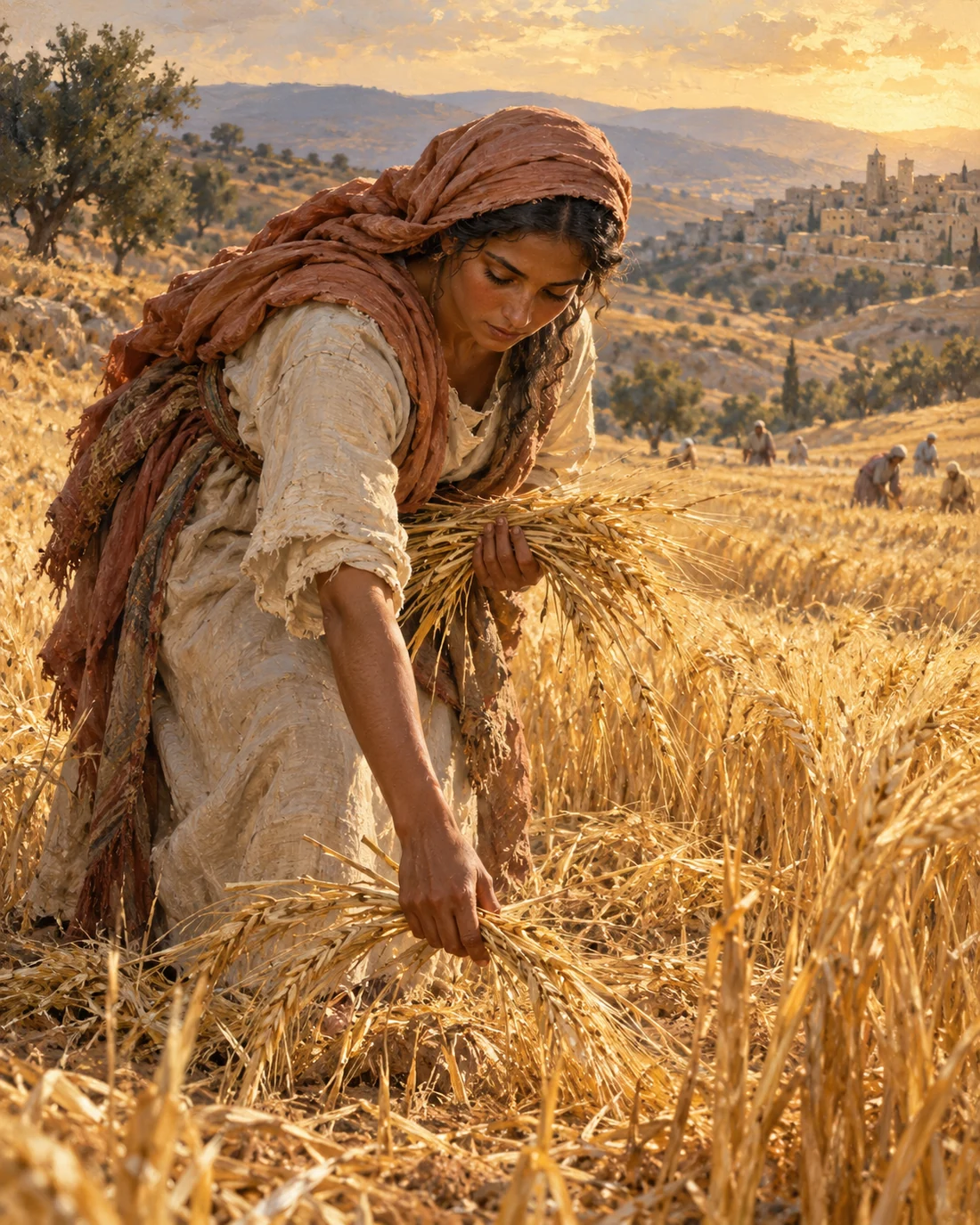
Begin with the field artwork on this page, then read Ruth 2. The image brings a working figure and grain into the foreground. Those elements can lead you toward the physical labor in the chapter. They do not tell you the entire story.
| What the chapter states | What an artist must decide |
|---|---|
| Ruth asks to glean and works in a field. | The exact posture, clothes, expression, and moment shown. |
| Boaz provides access, water, food, and instructions for her treatment. | Whether Boaz or the other workers appear in this particular frame. |
| Ruth returns to Naomi with grain and food. | Whether the picture includes the return or only the day’s work. |
A useful reflection might ask how practical care changes the conditions of work in this story. A less grounded claim would assign an exact private thought to Ruth because of her expression in the picture. The distinction does not make art less useful; it makes the conversation with scripture more honest.
Read the Ruth 2 study guide if you want to follow those acts of care through the whole chapter.
A visual Bible study note you can copy
Passage: book, chapter, and verses.
I can see: three visible details, without guessing motives.
The text says: two details with verse references.
The artwork chooses: one detail the passage does not specify.
I want to investigate: one question the image raised.
My response: a reflection or prayer, labelled as my own.
If an image is generated with AI, the same checks apply. It can contain plausible-looking objects or settings that do not fit the passage. The method is to examine it against the text, not to assume visual confidence equals historical accuracy.
Using artwork in a small-group Bible study
Invite each person to name one observation before anyone explains the image. Then read the passage together. Ask which observations the text supports and which belong to the artist’s choices. This gives quieter readers a concrete way to contribute without requiring everyone to agree on a personal emotional response.
Finish by asking what the picture leaves outside its frame. For Psalm 23, a pasture image might emphasize rest while leaving out the valley, the enemies, or the table. Reading the whole poem brings those details back into view.
What should an image never replace?
An image cannot settle a translation question, prove a historical detail, or turn a character’s imagined speech into a quotation from scripture. First-person retellings can be literary teaching, but they need to remain labelled as retellings. Personal application also needs its own label.
Use the picture as an invitation to notice and reread. For a starting passage, try the Psalm 23 guide. If you want to write a response afterward, the prayer journal prompts give you a place to begin.